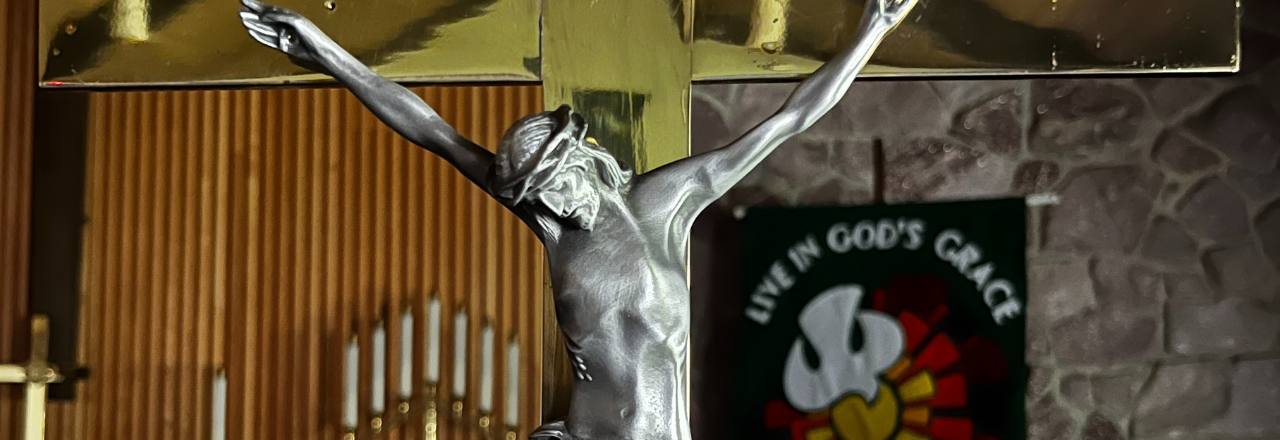
The Bible
These things are written so that you may believe that Jesus is the Christ, the Son of God, and by believing you may have life in His Name. John 20:31
Everything we believe, teach, and confess at Our Savior’s has the Bible as its foundation. The books that make up the canon of Holy Scripture, beginning with Genesis and ending in Revelation is where we find our life.
Every Word written in the Scriptures by the prophets, the holy apostles, and the blessed evangelists was given to them by the Holy Spirit in order that we can know Him, His will for us and His creation, and that we may have eternal life. Scripture is inspired.
No prophecy was ever produced by the will of man, but men spoke from God as they were carried along by the Holy Spirit. 2 Peter 1:21
Also, because the Bible comes from God, it is without error, or inerrant.
Scripture cannot be broken John 10:35
All Scripture is breathed out by God and profitable for teaching, for reproof, for correction, and for training in righteousness, that the man of God may be competent, equipped for every good work. 2 Timothy 3:16-17
God
We begin each worship service at Grace in the name of our God, the Holy Trinity, the Father, the Son, and the Holy Spirit. (Matthew 28:19) God the Father created everything and still upholds it by His Fatherly, divine goodness and mercy. Mankind fell in Adam’s fall and brought sin and death into the world that spread to all men.
God in His mercy sent His only Son into the same world to fulfill the Law and, to pay for our sins by dying on the Cross, and to win eternal life for us by rising from the dead on the Third Day. The Holy Spirit calls us to faith in what Jesus accomplished on the Cross and the Empty Tomb. He forgives our sins and gathers us into the Church where God has promised to give us life and salvation.
Word & Sacraments
Jesus died and rose from the dead almost two-thousand years ago. How does God bring the blessings that Jesus won for us today?
God’s Word
He gives us His Holy Word, the Bible. He sanctifies us in Truth, and His Word is truth. God teaches us who He is and sets His promises before us so that we may believe them. His Word comes by the reading of Scripture, and by true preaching of the same Word. We also hear this Word when we truly repent and confess our sins, and then hear that are sins are forgiven and we are washed clean in the Blood of Jesus. This happens during the church service, during individual confession with the Pastor, or when brothers and sisters in Christ forgive each other for Jesus’ sake.
Holy Baptism
Romans chapter 6 teaches that in Baptism we are buried with Jesus in His death, and that just as He was raised from the dead by the glory of the Father, we too have the promise of new life here in time and there in eternity. God drowns our sinful nature and raises us to new life as His children. This is a gift that Christ desires for all people, including children and infants.
The Lord’s Supper
In the Lord’s Supper, what we also refer to as the Sacrament of the Altar or Holy Communion, Jesus gives us His Body and Blood, not symbols, but the real thing, under the bread and wine, for Christians to eat and to drink. In this meal, Jesus gives us the forgiveness of sins, the new life of faith, and eternal salvation that He won on the cross. Therefore, we desire to receive this gift often. Holy Scripture warns against receiving these gifts in an unworthy manner. We ask that all visitors speak with the pastor before approaching the altar.
In the Divine Service we receive these gifts. Find out how to prepare for the Divine Service, and how to take these gifts back home with you.
The Lutheran Confessions
Why are we Lutherans? We believe that the Lutheran Confessions faithfully and truly present and teach the doctrine of the Bible. We hold to the confessions because they teach to the faith that Christ’s Church has always taught. These confessions include the Apostles’, Nicene, and Athanasian Creeds, The Augsburg Confession and the Apology of the Augsburg Confession, Luther’s Large and Small Catechisms, The Smalcald Articles, The Treatise on the Power and Primacy of the Pope, and the Formula of Concord.
In the Small Catechism, we learn the basics: The Ten Commandments teach us God’s will for our lives, so that we may repent of our sins and see the shape of our Christian lives. The Apostles’ Creed teaches us to know God, Father Son and Holy Spirit. Jesus teaches us to pray in the Lord’s Prayer. And the sections on Baptism, Confession & Absolution, and the Sacrament of the Altar teach us how we can, in our lives today, receive the forgiveness of sins, life, and salvation that Christ won for us by His holy, precious, blood, and His innocent suffering and death.
Christian Worship and the Divine Service
At Our Savior’s, our Divine Service—derived from a German term meaning “Service of God”—invites you to experience how God serves you. Rather than simply serving, we receive His boundless forgiveness, life, and salvation as we listen to His Holy Word, partake in His Sacraments, and respond with prayer, praise, and thanksgiving.
In the Divine Service, we receive God’s Word as He speaks to us through the Scriptures, the preaching of His Gospel, and the absolution that declares our sins forgiven for Jesus’ sake. His Word is living and active, calling us to repentance, strengthening our faith, and giving us the assurance of His promises.
At the Lord’s Supper, Christ Himself comes to us in His true Body and Blood, given under the bread and wine, for the forgiveness of sins, life, and salvation. As Scripture warns against unworthy reception (1 Corinthians 11:27-29), we ask all visitors to speak with the pastor before communing, so that all who come to the altar may receive this gift in faith, discerning the Lord’s body rightly.
Music & Liturgy
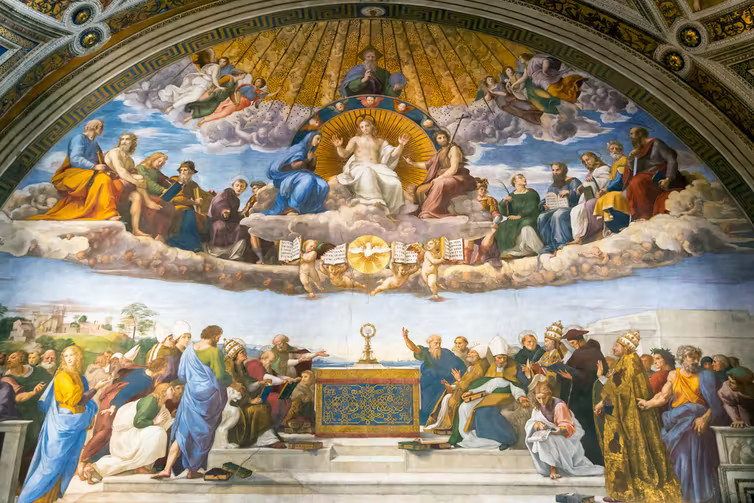
Our worship embraces the historic liturgy known as the common service—a treasured tradition over 1,600 years old that connects us with the early church. We sing the same words and confess the same truths passed down through generations because we have the same Christ. Our hymnal is shared by Christians around the world and includes timeless hymns dating back to Ambrose of Milan (c. 340–397 AD) as well as the Psalms once sung in the Old Testament temple, as well as faithful hymns written in our own day. It is worship that allows children, parents, and grandparents to participate together because we are all speaking the same language: the Word of God!
At Our Savior’s much of our service is sung. We sing because God calls us to do so. As Scripture teaches, we are to “speak to one another in psalms and hymns and spiritual songs, singing and making melody in [our] heart to the Lord” (Ephesians 5:19) and to “let the word of Christ dwell in [us] richly… teaching and admonishing one another in psalms and hymns and spiritual songs, singing with grace in [our] hearts to the Lord” (Colossians 3:16). Our singing unites us as the Body of Christ on earth, and it joins us to the heavenly worship of the saints and angels around the throne of the Lamb (Revelation 5:9-14). In this way, our hymns and liturgy are not merely acts of tradition but confessions of faith that proclaim Christ’s saving work to one another and the world.

Do You Have Other Questions?
For information concerning our beliefs and practice about specific topics, please see the LCMS “What About” pamphlets below.
- Introduction
- Abortion
- Angels
- Being a Lutheran
- Christian Families
- Christian Stewardship
- Confession and Absolution
- Creation and Evolution
- Death and Dying
- ELCA and LCMS Differences
- Fellowship in the Lord’s Supper
- Holy Baptism
- Homosexuality
- Islam
- Jehovah’s Witnesses
- Living Together Without Marriage
- Lutheran Worship
- Mormonism
- Pastors
- Telling the Good News of Jesus
- The Apostles’ Creed
- The Bible
- The Gospel
- The Lord’s Prayer
- The Missouri Synod
- The New Millennium
- The Ordination of Women
- The Sacrament of the Altar
- The Small Catechism
- The Ten Commandments